
Advent Calendar Day 21 - December 2
Cover reveal for Pages Lost and New (essays by Margaret Randall) and an excerpt from Thinking about Thinking
The legendary and prolific author has a new collection of essays coming out in Spring 2026. To celebrate its announcement, we are sharing an excerpt from her earlier book of “not quite essays.”
Plus, today only, get 21% off Thinking about Thinking and preorders for Pages Lost and New—no code required.

Early praise for Pages Lost and New
“Margaret Randall’s Pages Lost and New is a rebel yell testament to the power of revolutionary identity and political commitment. It is essential reading for any of us hungry for firsthand accounts of how social movements, literary ecosystems, and lesbian politics come together to challenge oppressive power structures.”
—Raquel Gutiérrez, author of Brown Neon
The Silliness Gene (from Thinking about Thinking)
As I write, my wife and I have been with one another thirty-four years. We’ve been living together since 1986 but were only able to legalize our union in 2013 when marriage equality became the law. We couldn’t have imagined that the civil ceremony would move us as much as it did. One detail we remember with delight was standing in line to get our license at Brooklyn’s City Hall. A couple of very large African American women were cutting it up in the line ahead of us. They and their contingent of friends were having a grand old time. One wore a baseball cap studded with outrageous buttons. Their joy, their silliness, were contagious. It seemed to combine the expression of a love that until recently had been outlawed with a healthy dose of being able to create a party from any situation.
Barbara and I have worked hard at a relationship we both feel immensely fortunate to have found, and there are many aspects of it that make it solid. Commitment. Trust. Transparency. The artist’s eye and love of one another’s work. Mutual support. Generosity of spirit. Dependability. Agreement on life’s major issues. And a general easiness in the comings and goings of daily life. But if you asked us to name a particularly important aspect of our relationship, I suspect we’d both say silliness.
Silliness is difficult to define, hard to put into words. You have it or you don’t. If you have it, you don’t need it explained. And if you don’t have it, no attempt at explanation seems to work. It’s not about trivialization or clownishness. Playfulness is definitely involved. Silliness often includes a banter only the two of us find funny. Sometimes it causes us to shake with laughter, descend into paroxysms of delight, tears spilling from our eyes. It’s at once unexpected and necessary. And extremely intimate. It is a behavior that draws us close, alleviates pain, and occasionally makes use of a dark humor we can only indulge with one another because anyone else might interpret it as sexist, racist, xenophobic, or incurring some other stance we vehemently reject. We can make that sort of joke with each other because we know we are not stepping into those cesspools but rather mocking those who do. Perhaps we are exorcising a biased upbringing by meeting it right where it lives and laughing in its bully face.
As we age, our hearing suffers. This can be annoying but also provides material for raucous exchanges. Our misheard comments easily contribute to bouts of silliness. One of us exclaiming, “Oh my god, I thought you said seventy dildos walking,” or the other hearing “Play with yourself” when the suggestion was “Take care of your health,” are miscommunications guaranteed to crack us both up. Other age-related missteps almost always conjure a silliness response rather than exasperation or grumpiness. It’s about repurposing disability as playfulness.
We wonder if we were born with a silliness gene, or if our vastly different social conditioning—Barbara had to overcome a working-class conservative and religiously fundamentalist background; I an upper middle-class liberal one—has nevertheless joined us at the hip.
When we met, most of our friends were surprised by the immediacy of our mutual attraction. Desire unleashed itself in torrents. Over the years, we’ve settled into quieter rhythms, but the intensity remains. When one of us has been away for a while, the other invariably suffers from a lack of silliness. When we’re back together and the silliness returns, we both experience immense relief. Just as easily, when one of us falls ill, silliness may become the victim of pain, low energy, or exhaustion. We miss it then.
We enjoy friends who are silly, even about momentous things, although we have many treasured friends who lack the gene. But those who take themselves or a situation too seriously tend to annoy or bore us. This is true even when we’re talking about inhumane political policies, war, disrespect for women and minorities, criminal immigration practices, bullying, and other brutalities. It’s not that we don’t feel the seriousness of the situation. We do, and deeply. But if we can’t change it, we might as well laugh about it. Dark humor is a release. Why? I can’t really say.
I wish I could give an example, one that would make clear what silliness is and how it functions. How we use but don’t abuse it, the invisible line we won’t cross. There is a sort of sophistication involved. It’s hard, because the example itself might reduce or invalidate the concept. When you try to share a private joke, you’ll find yourself spending twice the time trying to explain why it was funny. And still, no one is laughing.
Maybe I should talk about cultures where I’ve noticed that silliness seems to be part of the fabric of everyday life. One of these, perhaps astonishingly, is Vietnam. In the fall of 1974, six months before the end of the U.S. American war in that country, I was invited by the North Vietnamese Women’s Union to travel the length of the northern half. Vietnam was divided then, and the north was firmly in Communist hands.
I was taken by jeep from Hanoi all the way down to the 17th Parallel and into the liberated zone of Quảng Tri, stopping along the way to speak with women who commanded anti-aircraft artillery, those who’d spent years in the underground tunnels, and young women whose husbands and brothers were on the front lines. My goal was to write a book about Vietnamese women in struggle. I was given a guide and a translator.
Often, I listened to my hosts talking among themselves. They laughed more than I expected. Could they be telling jokes in the midst of this tragic war? When I asked, they translated, trying hard to explain what had been so funny. One joke involved bombs “descending like turds.” They looked at me, perhaps expecting me to join in their laughter. I must have looked nonplussed. Only years later did I understand that these Vietnamese comrades were using dark humor and silliness to defuse the daily tension in which they lived.
When Barbara, who taught middle school for twenty years, would tell me about a joke one of her Navajo students had pulled, I identified the silliness component in his humor. Maybe silliness is a way some groups who live with constant hardship deal with that pain. I understand its utility now.
It is said that desperate times call for desperate measures.
Silliness may be to despair what social struggle is to the frustration of witnessing the destruction of our good earth and the devastation of its peoples. We haven’t yet been able to reverse the trend, so we hope silliness will take up the slack.
Read more of these essays—ranging from the contemplative to the powerful and political—in THINKING ABOUT THINKING and the forthcoming PAGES LOST AND NEW, both from Margaret Randall.
Also: today only, get 21% off of each book—no code required.
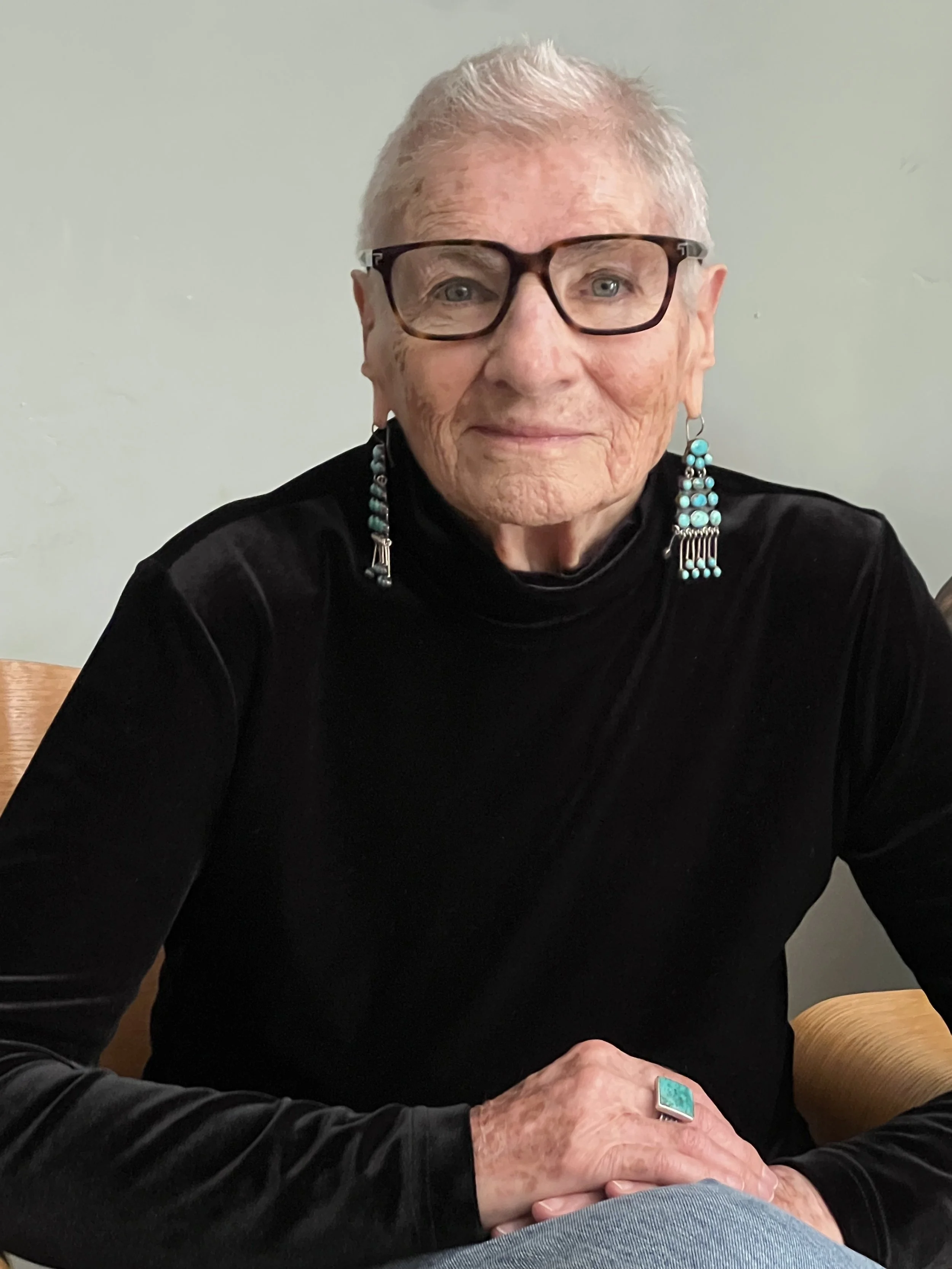
About the Author
Margaret Randall is the author, editor, and translator of more than two hundred books. These include several volumes of poetry from Casa Urraca Press, as well as the essay collections Thinking about Thinking, Last Words, and the forthcoming Pages Lost and New. Her talk, “Writing Under Fascism,” has drawn large and engaging crowds at the Albuquerque Museum and at Naropa. You can browse all her Casa Urraca Press titles here.